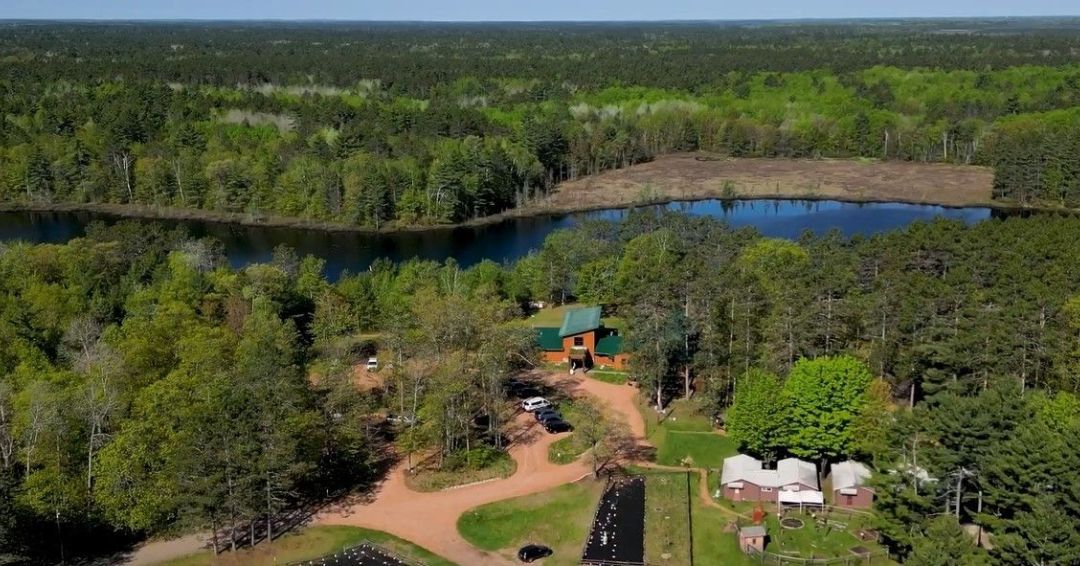


manitowish Waters chain of lakes
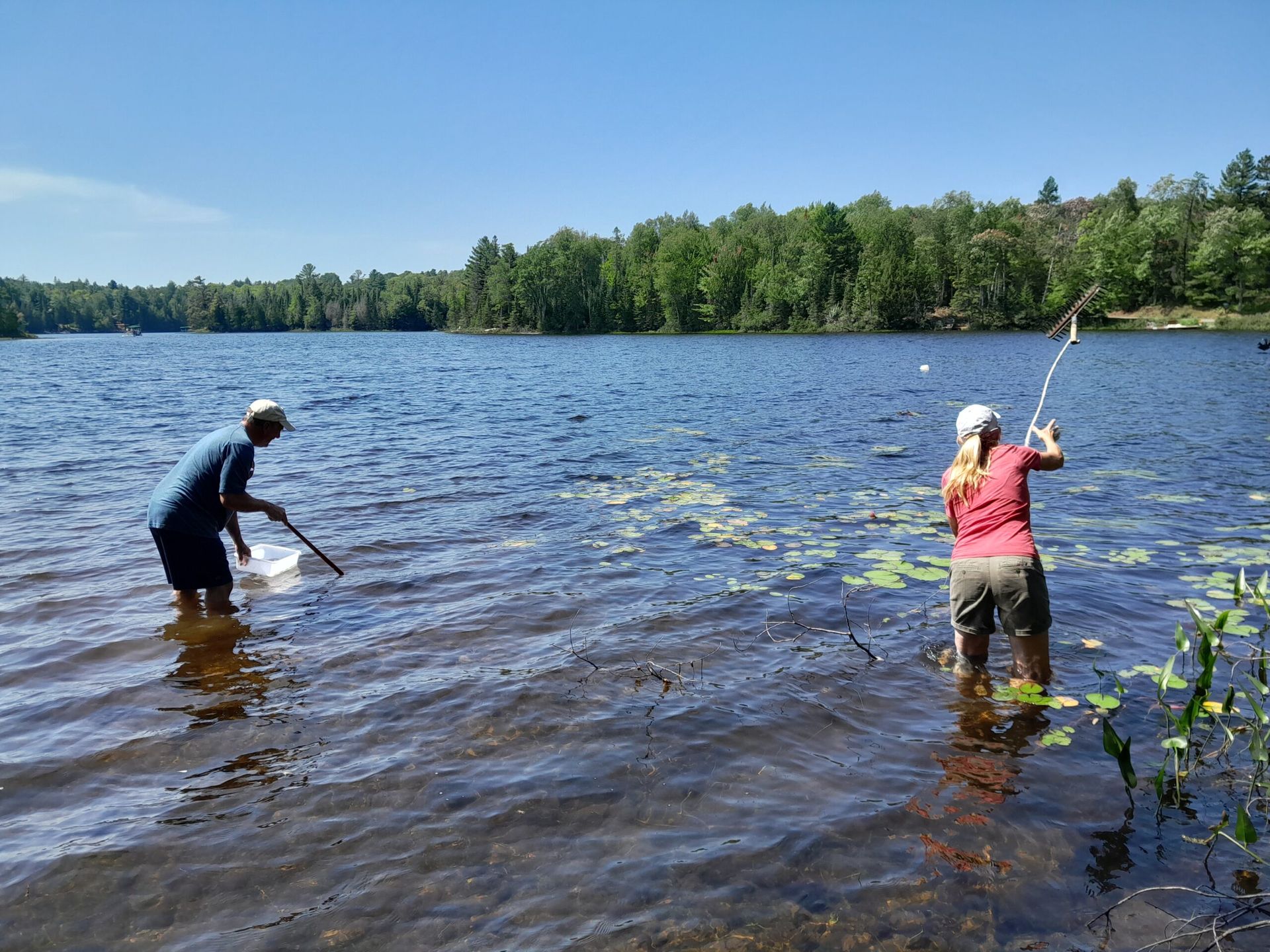
Strength in Numbers
Monitoring the Manitowish Waters Chain of Lakes for Aquatic Invasive Species is a challenging feat and you can help. Learn how to identify our biggest threats and look for them when you are out on the water. Record your hours on our form below and submit them.
- Your time is money. Volunteer time = $15/hour leveraged as cost share to receiving grant funding.
- Attend an AIS and Healthy Lakes workshop to learn how to identify and report.
- Look for AIS when you're on the water.
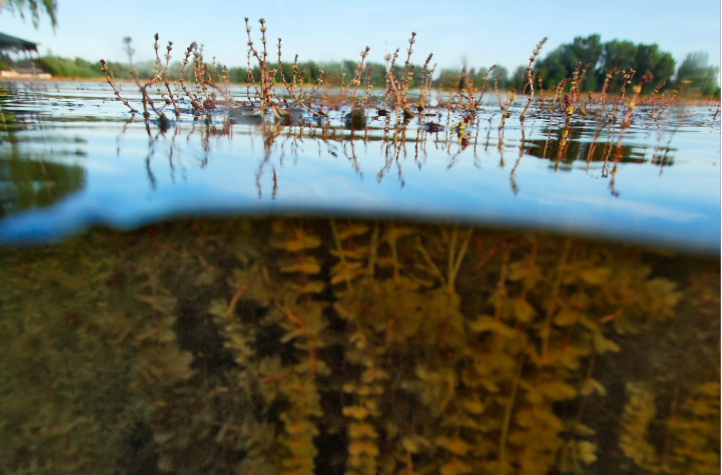
Eurasian Watermilfoil
Eurasian Watermilfoil was first detected in summer of 2023 and has since been detected in all the lakes but Benson, Clear and Island Lakes. The majority of the population maintains in the Trout River, followed by Manitowish Lake.
Manitowish Waters Lakes Association
Visit their website to learn more about ongoing projects on the Manitowish Chain of Lakes.

Most Recent Monitoring and Management Mapping
Eurasian Watermilfoil was first detected in summer of 2023 and has since been found in all the lakes but Benson, Clear, and Island lakes. The majority of the population maintains in the Trout River, followed by Manitowish Lake where active large scale control grants are monitoring and managing the populations.
Curly-leaf Pondweed was first detected in 2010. Over the past decade variety of control efforts have been used and the population is maintained today by a combination of hand-harvesting and diver assisted suction harvest (DASH).
Curly-leaf Pondweed Maps, 2025
Purple Loosestrife has been monitored and managed using biocontrol since 2005. Galerucella beetles are reared at the North Lakeland Discovery Center and released on well established purple loosestrife populations. Other methods used include hand-digging purple loosestrife when there are few to single plants, and clipping flower heads to reduce the spread of viable seeds.
Reports
The Town Aquatic Invasive Species Partnership (TAISP) consists of the North Lakeland Discovery Center (NLDC), the Manitowish Waters Lakes Association (MWLA), the Winchester Town Lakes Committee (WTLC), and the Towns of Manitowish Waters, Boulder Junction, and Winchester. This yearly report, summarizes aquatic invasive species (AIS) and other projects that have occurred.
The comprehensive plan for the Manitowish Waters Chain of Lakes was developed by Onterra, LLC and approved in December 2020. The planning committee was comprised of board members from Manitowish Waters Lakes Association, North Lakeland Discovery Center, and riparian property owners.
Manitowish Waters Chain of Lakes Comprehensive Plan, Chainwide
Manitowish Waters Chain of Lakes Comprehensive Plan, Alder Lake
Manitowish Waters Chain of Lakes Comprehensive Plan, Benson Lake
Manitowish Waters Chain of Lakes Comprehensive Plan, Clear Lake
Manitowish Waters Chain of Lakes Comprehensive Plan, Fawn Lake
Manitowish Waters Chain of Lakes Comprehensive Plan, Island Lake
Manitowish Waters Chain of Lakes Comprehensive Plan, Little Star Lake
Manitowish Waters Chain of Lakes Comprehensive Plan, Manitowish Lake
Manitowish Waters Chain of Lakes Comprehensive Plan, Rest Lake
Manitowish Waters Chain of Lakes Comprehensive Plan, Spider Lake
Manitowish Waters Chain of Lakes Comprehensive Plan, Stone Lake
Manitowish Waters Chain of Lakes Comprehensive Plan, Sturgeon Lake
Manitowish Waters Chain of Lakes Comprehensive Plan, Vance Lake
Manitowish Waters Chain of Lakes Comprehensive Plan, Wild Rice Lake
The comprehensive plan for the Manitowish Waters Chain of Lakes recommends periodic vegetation monitoring updates. Following the same phased approach as the first series of planning efforts, aquatic plant point intercept (PI) data has been collected by NLDC and findings are reported below.
Aquatic Plant Point Intercept Report: Rice Creek, 2023
Aquatic Plant Point Intercept Report: Wild Rice Lake, 2024
Aquatic Plant Point Intercept Report: Little Star Lake, 2025
Aquatic Plant Point Intercept Report: Vance Lake, 2026 (coming soon)
Aquatic Plant Point Intercept Report: Sturgeon Lake, 2026 (coming soon)
Aquatic Plant Point Intercept Report: Benson Lake, 2026 (coming soon)
To learn more about aquatic plant data, see Wisconsin Department of Natural Resources Aquatic Plant Explorer database.